
The logistics and transportation industry is experiencing simultaneous pressures from multiple directions: e-commerce growth requiring ever-faster and cheaper delivery, driver and labor shortages limiting capacity, fuel price volatility squeezing margins, and customer expectations for visibility that were unimaginable five years ago. The organizations winning in this environment share a common trait: they’ve invested in the data infrastructure and intelligent systems that allow them to operate with confidence in conditions of constant uncertainty. We’ve partnered with 250+ logistics and transportation organizations to build that capability—delivering measurable improvements in cost efficiency, service reliability, and customer experience.
Logistics & Transportation
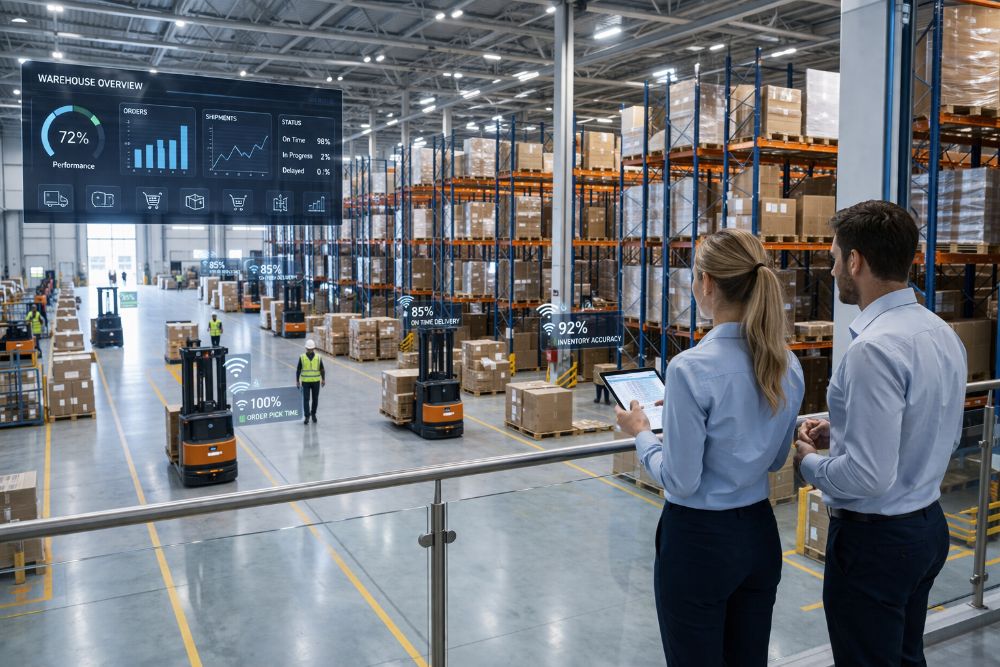
Build supply chains that adapt in real time, fleets that run at peak efficiency, and last-mile delivery networks that consistently delight customers. We help 3PLs, carriers, shippers, and logistics technology companies digitize operations, optimize routes, and gain the end-to-end visibility that turns supply chain from a cost center into a competitive advantage.
32%
Reduction in Logistics Costs
98.4%
On-Time Delivery Rate Achieved
45%
Improvement in Fleet Utilization
250+
Logistics & Transportation Clients
The Logistics & Transportation Landscape
Key Challenges
Critical problem points that are often encountered
End-to-End Supply Chain Visibility
Most supply chains are a patchwork of carrier EDI feeds, spreadsheets, and phone calls—leaving shippers blind to where shipments are, why they're delayed, and what to do about it. A 2-hour delay at a port can cascade into a $2M stockout event at a retailer, but without real-time visibility, the supply chain team learns about it when it's already too late to respond.
Last-Mile Delivery Cost & Experience
Last-mile delivery represents 53% of total shipping cost and is the only customer-facing moment in the supply chain. Rising carrier rates, delivery attempt failures, porch piracy, and return rates make last-mile economics increasingly challenging. Customers simultaneously expect free, same-day delivery and live tracking visibility—demands that are fundamentally in tension with network economics.
Fleet Management & Driver Compliance
Fleet operators managing hundreds or thousands of vehicles across dispersed geographies struggle with fuel cost optimization, ELD/HOS compliance, driver safety monitoring, preventive maintenance scheduling, and asset utilization. Manual processes, siloed telematics systems, and paper-based workflows cost the average fleet $1,200–2,400 per vehicle annually in preventable inefficiency.
Supply Chain Disruption & Resilience
The last five years have demonstrated that low-probability, high-impact supply chain disruptions—pandemics, port closures, carrier bankruptcies, extreme weather—are now routine rather than exceptional. Organizations relying on single-source suppliers and just-in-time inventory with no visibility beyond tier-1 are fundamentally exposed. Building supply chain resilience requires both better data and different operational playbooks.
Our Solutions
How we provide solutions for your industry challenges
Real-Time Supply Chain Visibility Platform
Unified control tower aggregating data from 500+ carrier APIs, ocean tracking providers, customs systems, and warehouse management systems into a single end-to-end shipment view. AI-powered exception management identifies shipments at risk of delay 48–72 hours before they miss delivery windows—early enough to actually do something about it. Automated carrier milestone reconciliation eliminates manual tracking.
AI Route Optimization & Last-Mile Platform
Dynamic route optimization engine processing real-time traffic, delivery time windows, vehicle capacity, driver schedules, and fuel costs to generate optimal routes in under 30 seconds. Machine learning models improve continuously from actual delivery outcomes. Last-mile carrier selection engine picks the best carrier for each shipment based on cost, transit time, and geographic coverage—automatically.
Fleet Intelligence & Driver Safety Platform
Connected fleet management integrating telematics, ELD compliance, dashcam AI, preventive maintenance scheduling, and fuel optimization into a unified fleet operations dashboard. Driver safety scoring using computer vision identifies harsh braking, speeding, distraction, and drowsiness in real-time—with in-cab coaching rather than after-the-fact reporting. Average fuel savings of 12–15% through optimized routing and idle reduction.
Warehouse Operations & Labor Management
Warehouse execution system integrating with WMS to optimize pick paths, direct labor allocation, and dock scheduling in real-time. Labor management module tracks productivity against engineered standards with gamified performance dashboards for associates. Slotting optimization engine analyzes pick frequency and velocity to reduce average pick travel distance by 30%, directly improving throughput without adding headcount.
Gallery Overview

Compliance & Regulations
Stay compliant with the latest industry regulations and standards.
SOC 2 Type II
ELD FMCSA Certified
GDPR & CCPA Compliant
C-TPAT Compatible
Technologies We Use
Our toolkit for delivering cutting-edge solutions across industries





Logistics & Transportation Benefits
Measurable outcomes that directly impact your bottom line and competitive position.
End-to-End Visibility
Real-time shipment tracking across all carriers and modes—from origin pickup through final mile delivery—replaces manual tracking and carrier calls with automated exception management.
32% Cost Reduction
Route optimization, carrier selection intelligence, warehouse slotting, and fleet fuel efficiency combine to significantly lower cost per unit shipped across all logistics spend categories.
98.4% On-Time Delivery
Proactive exception management and dynamic rerouting capabilities enable operations teams to intervene before delays become misses—consistently exceeding customer SLA commitments.
4.8/5 Delivery Experience
Proactive customer notifications, accurate delivery windows, and real-time tracking links reduce delivery-related customer service contacts by 60% while driving higher satisfaction scores.
Ready to Start?
Get a free consultation and get a solution that suits your industry.
Response within 24 hours
No long-term commitment required
Real-World Use Cases
Explore how we've helped clients across various industries achieve transformative results with our solutions.
Supply Chain Control Tower for CPG Manufacturer
Global CPG Manufacturer - $8B Revenue
The Scenario:
Global CPG manufacturer shipping 2.4M orders annually via 60+ carrier relationships had no unified view of in-transit shipments. Supply chain team spent 40% of time manually pulling carrier tracking data into spreadsheets. On-time delivery rate was 81%—below customer SLA thresholds that triggered $18M annually in financial penalties. Disruptions were discovered reactively, average 28 hours after they occurred.
The Implementation:
Deployed supply chain control tower connecting all 60 carrier APIs, 4 freight brokers, and 12 warehouse systems into unified visibility platform. AI exception engine scores each shipment risk every 4 hours, surfacing only the 3% of shipments requiring human intervention. Automated carrier performance scorecards replaced quarterly manual reviews. Integration with customer order management enables proactive delivery delay notifications.
The Results:
94.8%
On-time delivery rate (from 81%)
40%
Reduction in manual tracking effort
$14M
Annual penalty reduction
4 hrs
Average disruption detection time (from 28 hrs)
Last-Mile Optimization for E-Commerce Fulfillment
Regional E-Commerce Fulfillment 3PL
The Scenario:
Regional 3PL managing last-mile delivery for 18 e-commerce clients across a 6-state territory. 380 delivery vehicles, 45% first-attempt delivery success rate generating massive re-delivery cost. Manual route planning took 4 hours each morning, drivers regularly missed delivery windows, and fuel costs had risen 38% in 18 months without corresponding route efficiency improvements.
The Implementation:
Deployed AI route optimization processing 8,000+ daily delivery stops in under 4 minutes. Dynamic re-optimization throughout the day accounts for real-time traffic, failed deliveries, and new pickup requests. Consumer notification engine sends delivery windows and tracking links, lifting first-attempt delivery to 91%. Driver app provides turn-by-turn guidance, proof of delivery capture, and direct customer communication.
The Results:
91%
First-attempt delivery rate (from 45%)
27%
Fuel cost per stop reduction
4 min
Route planning time (from 4 hours)
22%
More stops per driver per day
Fleet Safety Transformation
National LTL Carrier - 4,200 Vehicles
The Scenario:
National LTL carrier with 4,200 vehicles had a DOT recordable accident rate 34% above industry average, costing $42M annually in claims, downtime, and insurance premiums. Safety team reviewed dashcam footage only after incidents occurred. Driver safety coaching was inconsistent, and the highest-risk drivers received the same coaching as average performers.
The Implementation:
Deployed AI-powered dashcam system with real-time event detection for harsh braking, speeding, distraction, and lane departure. In-cab audio coaching provides immediate feedback without dispatcher intervention. Risk scores updated daily, enabling safety managers to prioritize coaching for the highest-risk 10% of drivers. Gamified safety leaderboards with weekly recognition for top performers.
The Results:
48%
Reduction in DOT recordable accidents
$19M
Annual insurance and claims savings
71%
Driver safety score improvement
12 months
Full ROI realization
Warehouse Slotting & Labor Productivity
Third-Party Logistics Provider - 14 Facilities
The Scenario:
3PL operating 14 fulfillment centers with 3,800 associates was experiencing declining throughput despite increasing headcount. Average pick travel distance was 1.4 miles per 100 picks. Labor costs had risen 28% in 2 years while productivity (units per labor hour) had declined 11%. Client SLA compliance was at risk, threatening $85M in annual contract revenue.
The Implementation:
Deployed warehouse optimization platform across all 14 facilities. Slotting optimization repositioned 40% of SKUs based on velocity, size, and correlation analysis—reducing average pick travel by 31%. Real-time labor management system assigns tasks dynamically based on live workload and individual associate skill levels. Engineered standards and gamified productivity dashboards implemented across all facilities.
The Results:
34%
Improvement in units per labor hour
31%
Reduction in pick travel distance
$22M
Annual labor cost avoidance
99.1%
Client SLA compliance rate
Logistics & Transportation Technology FAQs
Common questions about supply chain visibility, fleet management, and last-mile delivery optimization.